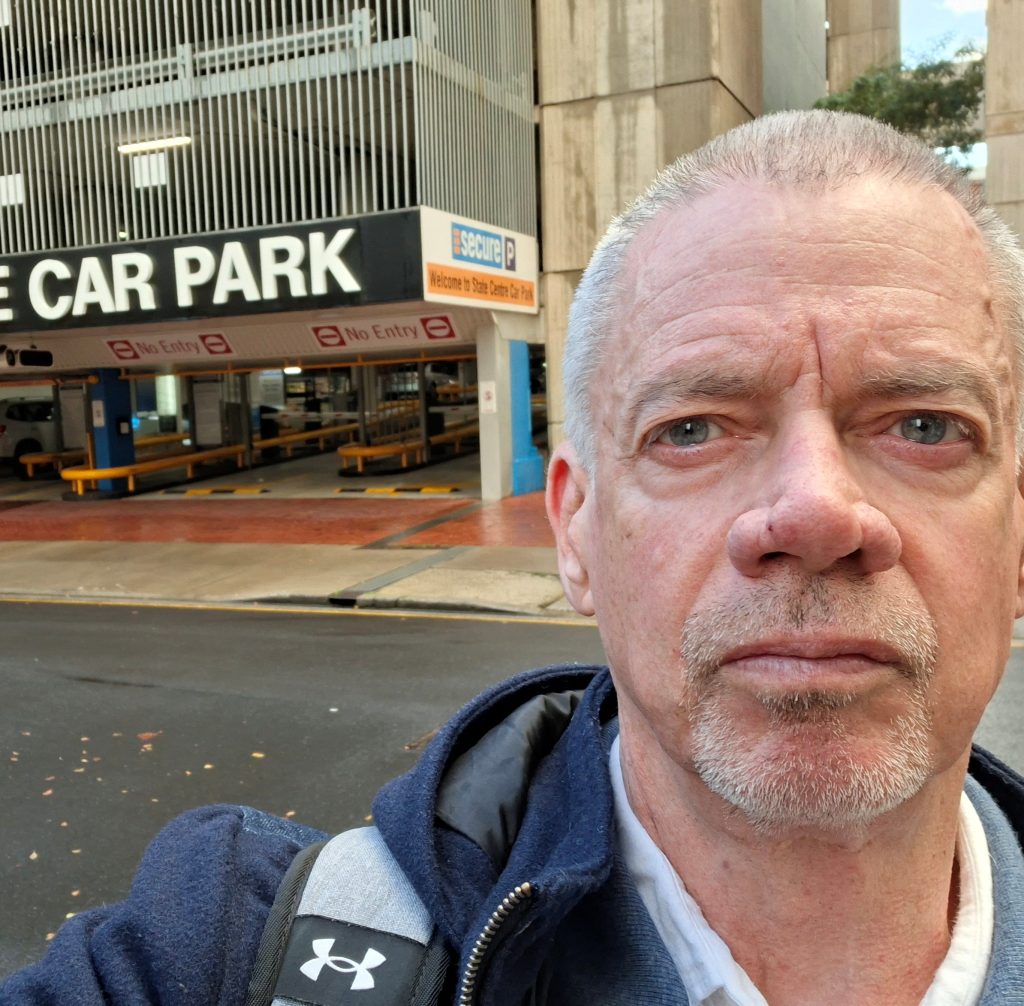
Better Places Through Parking David Mepham
Parking reform influences much more than where we leave our cars. It shapes our main streets, local businesses, shopping centres, public transport and even whether children feel safe riding to school.
In this People and Projects episode of Streets and People, urban planner Dr David Mepham chats about why parking matters, how minimum parking requirements have shaped Australian cities, and how thoughtful parking reform can help create places that are practical, welcoming and enjoyable.
Whether you’re interested in transport, planning, local government or simply want to understand why our towns look the way they do, this conversation offers a fresh perspective grounded in everyday experience.
Parking reform is about creating better places
Every parking space represents a decision about how valuable land is used. David explains how thoughtful parking reform can support more attractive streets, stronger local businesses and places people enjoy spending time in.
Minimum parking requirements shape our cities
Many planning rules still require developments to provide more parking than they regularly need. David explores how these requirements influence businesses, housing and the way neighbourhoods grow.
Better planning begins by understanding different experiences
Whether we’re walking, cycling, catching public transport, pushing a pram or driving, people experience the same place differently. Good planning begins by listening to those different experiences.
David suggests that during Adelaide’s morning peak, around half of city traffic may be associated with people looking for, accessing or leaving parking. It offers a very different way of thinking about congestion and how parking influences our streets.
One of the most memorable moments comes when David describes spending just twenty minutes pushing a friend’s stroller while working on the Gold Coast Light Rail project. That simple experience helped him notice barriers he had never previously considered and reinforced how valuable lived experience can be in planning.
Table of contents
- Why parking reform matters
- Looking beyond the driver’s seat
- Public land and better places
- Minimum parking requirements
- Parking reform in shopping centres
- Helping children travel safely
- Learning from lived experience
- Looking beyond planning silos
- Final thoughts
Why parking reform matters
Parking reform is often seen as a technical planning issue, yet Dr David Mepham argues it influences many parts of everyday life. Decisions about parking affect how our town centres function, how easily people reach local businesses, how comfortable our streets feel and how communities grow over time.
For many people, parking is simply the last part of a journey. We notice it when we’re looking for a space or walking back to our car. David suggests that this narrow perspective can make it difficult to see the broader role parking plays in shaping our towns and cities.
Throughout the conversation, he encourages listeners to look beyond the parking space itself and consider the choices behind it. Every parking space occupies land that could also be used for wider footpaths, outdoor dining, landscaping, bicycle facilities or safer places for people to cross the road. Good planning involves weighing these options carefully so that public space supports the community as effectively as possible.
David also explains that parking influences far more than traffic. It affects the viability of local businesses, the cost of development, the design of shopping centres and even the way people choose to travel. When parking is planned thoughtfully, it can support places that are attractive to visit, easy to move around and enjoyable to spend time in.
One of the themes running through the discussion is that parking decisions are ultimately place-making decisions. They shape the character of our neighbourhoods and influence the everyday experiences of the people who live, work and visit there.
Rather than seeing parking reform as simply providing more parking or less parking, David invites us to think about how parking can best support places that work well for everyone, now and into the future.
About Dr David Mepham
Dr David Mepham is an urban planner and the author of Rethinking Parking: Planning and Urban Design Perspectives. His work explores how parking influences transport, urban design, local businesses and the quality of our public spaces. Through planning, research and public engagement, he encourages communities to think differently about how parking can help create better places.
How David became interested in parking
David’s interest in parking didn’t begin with cars. It began with sociology and a simple question: why do some people have more opportunities than others?
While studying urban sociology, he became interested in how neighbourhoods shape people’s lives. Where people live influences access to jobs, education, services and recreation. In many suburbs, everyday opportunities depend on being able to drive, which can create challenges for people who cannot drive or cannot afford to own a car.
That interest eventually led him into urban planning and later to major projects including the Gold Coast Light Rail. During that work, he found that discussions about transport repeatedly returned to one topic: parking. The strength of community reactions made him curious enough to explore why people feel so strongly about it, eventually leading to his book Rethinking Parking.
Parking psychology
One of the questions David has spent a great deal of time exploring is why parking generates such strong reactions.
After working on the Gold Coast Light Rail project and later writing a parking strategy for the Gold Coast, he noticed that conversations about parking often became far more emotional than discussions about almost any other aspect of transport.
His explanation is simple. Most people only think about parking during the final moments of a car trip. After enjoying the drive, they suddenly need to find somewhere to leave the car. Searching for a parking space can create a sense of urgency, and anything that delays that process can quickly become frustrating.
David suggests that this shapes the way many of us think about parking. We experience it from the driver’s seat, focused on our immediate needs rather than the broader role parking plays within a town or city.
Stepping back reveals a much wider picture.
Parking is also about economics, history, politics, urban design and how communities choose to use valuable land. Looking at parking from these perspectives helps explain why decisions about parking influence much more than simply where cars are stored.
David doesn’t dismiss the emotions people feel. Instead, he encourages us to recognise them while also asking a broader question: what kind of places do we ultimately want to create?
Most people enjoy walking through attractive town centres, browsing local shops, meeting friends for a coffee or spending time in welcoming public spaces. Parking supports those places, but it is only one part of creating destinations that people enjoy visiting.
Public land and creating better places
For David, one of the most important ideas is that streets are public land.
Every on-street parking space occupies land that belongs to the whole community. That same space could potentially accommodate wider footpaths, street trees, outdoor dining, bicycle facilities, safer pedestrian crossings or continue to provide parking.
None of these options is automatically right or wrong. The challenge for councils is deciding how public land can best serve the community over time.
In busy town centres, David argues that parking is often occupying some of the most valuable public land available. Modern parking technology now allows councils to understand when demand is highest and manage parking more effectively.
He also explains that revenue from parking can be reinvested into improving the streets themselves. Better lighting, cleaner streets, more seating, landscaping and public art all contribute to places where people choose to spend more time, supporting both the community and local businesses.
Rather than viewing parking as an isolated issue, David encourages us to see it as one of the many tools available to shape places that are enjoyable, practical and successful.
Minimum parking requirements
David also discusses one of the biggest influences on how Australian towns and cities have developed: minimum parking requirements.
Introduced from North America during the 1950s, these planning rules require developments to provide a minimum number of parking spaces based on the type of business or building being proposed.
While the intention was to ensure enough parking was available, David believes the approach often provides considerably more parking than is needed for most of the year.
He describes it as the “Boxing Day sales” approach to planning. Instead of designing for everyday demand, developments are designed around the busiest shopping day imaginable. As a result, many car parks remain partly empty for much of the year, while occupying valuable land and increasing costs for businesses.
David points to an emerging international trend towards greater flexibility. Rather than requiring every development to provide large amounts of parking, some cities are allowing businesses to decide how much parking they genuinely need, supported by shared parking and other parking options nearby.
This approach allows land to be used more efficiently while still providing convenient access for customers. It also encourages people to experience entire town centres rather than simply driving to one shop, parking directly outside and leaving immediately afterwards.
For David, parking reform is not about removing parking. It is about planning parking thoughtfully so that it supports vibrant town centres, thriving businesses and places that people enjoy returning to.
Shopping centres and the hidden cost of parking
Shopping centres provide another example of how parking influences the way places evolve.
David explains that many of Queensland’s major shopping centres were originally built on the edge of cities when land was relatively inexpensive. As those centres expanded over the decades, more shops were added while much of the original surface parking was gradually replaced with buildings. The result has been an increasing demand for parking and the construction of expensive multi-storey car parks.
Although parking at shopping centres often appears to be free, David points out that someone is always paying for it. The cost of constructing, maintaining and managing parking is built into the overall operation of the centre and is ultimately reflected in business costs.
For David, greater transparency helps people understand these trade-offs. Knowing what parking costs allows businesses, shoppers and decision-makers to have more informed conversations about how parking should be managed and how it contributes to the overall shopping experience.
He also reflects on visiting the site of one of the world’s earliest drive-in shopping centres in Detroit. The centre had closed, and the land was being considered for an Amazon warehouse. To David, it highlighted how retail continues to evolve and why long-held assumptions about parking deserve to be reconsidered as our towns and cities change.
Children, schools and everyday travel
Towards the end of the conversation, the discussion shifts from parking to something much more personal: children’s independence.
David says it is disappointing that many children no longer ride to school, even though many families would like them to. Parents’ concerns about road safety are understandable, and he believes those concerns deserve careful consideration when planning neighbourhoods and transport systems.
He argues that many of the challenges children face are closely connected to the way we design our streets. Decisions about parking, traffic and access all influence whether walking and riding feel comfortable and safe for families.
Park-and-ride and unintended consequences
David also discusses the role of park-and-ride facilities around railway stations and bus interchanges.
While these facilities provide an important service for many commuters, he explains that they can also create unintended consequences. Once the official car park fills, drivers often begin searching nearby residential streets for somewhere else to park. David refers to this as “park and hide”.
That additional traffic occurs at exactly the same time many people are walking, cycling or making their way to public transport. The result can be busier local streets and more interactions between people travelling in different ways.
David also notes that land around railway stations is among the most valuable in many cities. Internationally, some public transport operators generate significant income by developing land around stations rather than relying primarily on fares alone. Looking differently at station precincts, he suggests, creates opportunities to make better use of valuable public land while continuing to provide access for people arriving by different modes of transport.
Learning from lived experience
One of the most memorable moments in the conversation has very little to do with parking itself.
While working on the Gold Coast Light Rail project, David’s understanding of planning changed after a friend asked him to push a stroller while she carried another child. The request seemed simple enough, yet within twenty minutes he found himself noticing obstacles and barriers that had never previously stood out to him.
That experience reinforced an important lesson: places are experienced differently depending on who we are and how we move through them.
Whether someone is pushing a pram, using a mobility aid, walking with young children or simply taking a little longer to cross the road, everyday journeys can look very different from another person’s perspective.
David believes planning improves when those experiences are heard. He encourages people who may not normally see themselves represented in transport discussions—including older Australians, people living with disability, those on lower incomes and people who cannot drive—to share their experiences with decision-makers.
Listening to a wider range of voices helps planners, engineers and elected representatives understand challenges they may never have experienced themselves. In David’s view, better places begin with curiosity, empathy and a willingness to see familiar streets through someone else’s eyes.
Looking beyond planning silos
As the conversation draws to a close, David reflects on the role planners, engineers and local government officers can play in creating better places.
His advice is to look beyond traditional professional boundaries.
Too often, he says, transport planning, urban planning and social planning are treated as separate disciplines, each working within its own area of responsibility. In reality, they are closely connected. Decisions about transport influence access to jobs, education, shops and services. The design of streets affects whether people feel comfortable walking, cycling or catching public transport. Likewise, planning decisions shape how communities function every day.
David believes these connections are too important to be separated into organisational silos. Whether someone works in transport, planning, engineering or community development, they are ultimately contributing to the same goal: creating places where people can move around safely, conveniently and comfortably.
He encourages younger professionals to stay curious, learn from other disciplines and remain open to different perspectives. Looking beyond organisational boundaries, he suggests, often leads to better decisions because it allows people to see how individual choices affect the wider community.
Final reflections
Parking may seem like a specialised planning topic, but throughout this conversation David demonstrates that it reaches much further than most people realise.
Parking influences how town centres operate, how businesses attract customers, how public land is used and how people experience the places where they live. It also affects decisions about walking, cycling, public transport and the way neighbourhoods continue to develop over time.
Rather than focusing solely on parking spaces, David encourages us to think about the places those parking spaces help shape. Every decision about parking is also a decision about the kind of community we want to create and the experiences we want people to have when they arrive.
Perhaps the most important message from the conversation is that good planning begins with curiosity. By asking thoughtful questions, listening to different experiences and looking beyond our own perspective, we gain a better understanding of how our streets and public spaces can continue to evolve.
What this means for our communities
Parking reform is often discussed in terms of cars, yet this conversation shows it is equally a conversation about people and places.
From the psychology of searching for a parking space to the hidden costs of minimum parking requirements, from shopping centres and railway stations to the everyday experience of pushing a stroller, David Mepham highlights how parking decisions influence many aspects of community life.
His message is neither about removing parking nor providing more of it. Instead, it is about thinking carefully about how parking supports the places we value and how public land can best serve the communities that use it.
As David says, “we are all part of the problem and we can all be part of the solution.” By approaching parking with curiosity and a broader understanding of its role in shaping our towns and cities, we can make choices that contribute to places that are practical, welcoming and enjoyable for everyone.
- David’s book: Rethinking Parking: Planning and Urban Design Perspectives
- You can find it here: https://www.routledge.com/Rethinking-Parking-Planning-and-Urban-Design-Perspectives/Mepham/p/book/9781032411491
- Get your discount! 20% off, use this code: 26AFLY2
- Offer valid until 30 September 2026
Podcast theme music: Doctor Yes | Yari | Bensound
