S3E7 PnP Andrea Herklots New eBike laws hurt disabled riders
Table of Contents
- Introduction: Why Queensland’s EBike Laws Threaten Disabled Riders
- Andrea Herklots and EveryBody EBikes: A Lifeline for Disabled Cyclists
- Key Proposed Changes in Queensland’s EBike Legislation
- The 10 km/h Speed Limit: A Barrier to Mobility
- Licensing Requirements: Excluding Those Who Need EBikes Most
- European Standards and the Exclusion of Adaptive EBikes
- Real Stories: How EBikes Empower Disabled Riders
- The NDIS and Aged Care: Funding Under Threat
- Community Advocacy: How to Fight for EBikes for Disabled Riders
- What You Can Do: Submit, Share, and Speak Up
- Conclusion: Protecting the Right to Ride
Queensland’s proposed eBike legislation threatens to strip away the independence and mobility of thousands of people who rely on eBikes for disabled riders. For individuals with disabilities, eBikes and adaptive trikes are not just a convenience. They are essential tools for freedom, health, and social connection.
Andrea Herklots, founder of EveryBody eBikes: The Home of Inclusive Cycling, joins us to discuss the devastating impact of these proposed laws. From children with cerebral palsy to elderly riders with Parkinson’s disease, the changes could force disabled Queenslanders off their bikes and back into isolation.
Andrea Herklots and Everybody eBikes: A Lifeline for Disabled Cyclists
Andrea Herklots didn’t start her career in the eBike industry. With a 30-year background in satellite imagery analysis, she brought her problem-solving skills to the world of eBikes for disabled riders when she and her partner, Richard, took over Blind Freddie Electric Bikes in 2019. Rebranding it as EveryBody eBikes, their mission was clear: to make cycling accessible to everyone, regardless of ability.
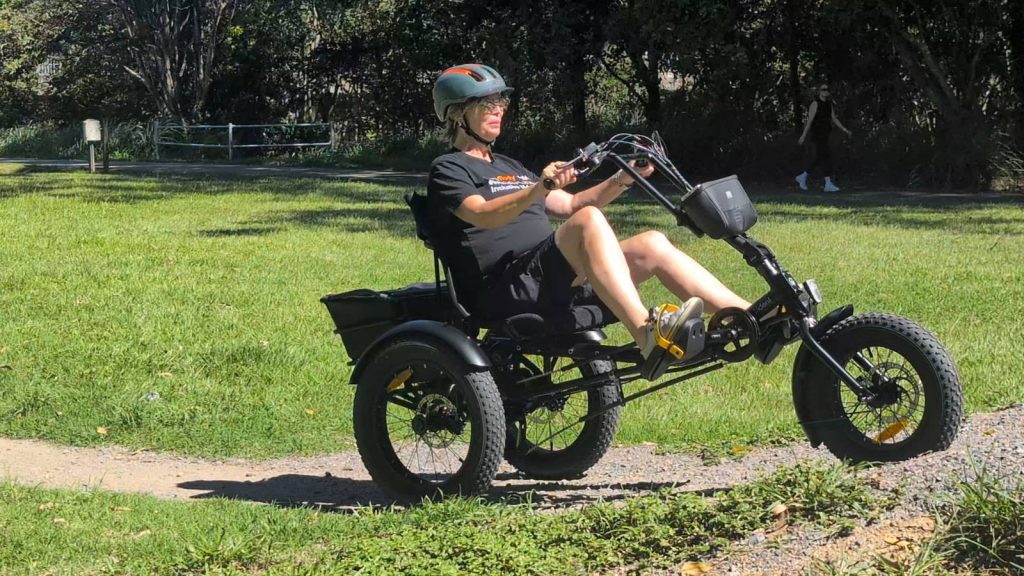
Today, EveryBody eBikes is one of Australia’s only retailers specialising in adaptive eBikes and trikes for people with disabilities. Their innovations include the world’s first eBike designed for people with dwarfism, created in collaboration with U.S. partners. They also offer semi-recumbent trikes for riders with balance issues, Parkinson’s disease, or stroke-related mobility challenges. Pedal-assist bikes for children with cerebral palsy, muscular dystrophy, and spina bifida are also part of their product line, along with cargo bikes and push-bar trikes for families supporting riders with complex needs.
“For many of our customers, an eBike isn’t a luxury, it’s their only way to get outside, exercise, and connect with others,” Andrea explains. “These laws could take that away.”
Key Proposed Changes in Queensland’s eBike Legislation
The Queensland government’s proposed eMobility laws introduce several radical restrictions that could severely impact eBikes for disabled riders:
Minimum Age and Licensing
Under the new laws, riders must be at least 16 years old and hold a driver’s license, including learner permits. This change would exclude children with disabilities who rely on pedal-assist bikes for mobility and therapy. It would also affect many elderly riders who no longer drive due to medical conditions.
10 km/h Speed Limit on Shared Paths
All eBikes and trikes would be required to travel at 10 km/h or slower on footpaths and shared paths. This speed limit is unsafe for many riders, particularly those with balance or strength limitations. It would force disabled riders onto roads, significantly increasing their risk of accidents.
European Standard (EN 15194) Compliance
Only eBikes meeting the EN 15194 standard would be considered legal. However, most adaptive trikes and eBikes for disabled riders cannot comply with this standard, as it was designed for 2-wheel bikes. There are no testing labs for trikes, making compliance impossible for these specialised vehicles.
Parent Liability and Retailer Responsibility
Parents of underage riders and retailers selling non-compliant bikes would face fines and legal action. This places an unfair burden on families and small businesses like EveryBody eBikes, which specialise in providing mobility solutions for disabled riders.
The 10 km/h Speed Limit: A Barrier to Mobility
Andrea tested the 10 km/h speed limit on Brisbane’s Kedron Brook bikeway, and the results were alarming. Riders struggle to balance at such low speeds, and the government’s own transport department acknowledges that 10 km/h is below the safe riding speed. Pedestrians and runners often move faster than 10 km/h, creating dangerous congestion on shared paths. Forcing disabled riders onto roads is not a viable solution, as many cannot ride on roads due to vision issues, balance problems, or fear of traffic.
The speed limit ignores the reality of eBikes for disabled riders. Most already ride cautiously and yield to pedestrians. A flexible, common-sense approach, such as slowing down when passing others, would be far safer and more practical.
Licensing Requirements: Excluding Those Who Need eBikes Most
The driver’s license requirement is a direct threat to disabled riders. Children with disabilities, such as those with cerebral palsy or muscular dystrophy, use pedal-assist bikes for therapy and mobility. These children would be left without a way to ride with their friends. Elderly riders who no longer drive due to conditions like Parkinson’s disease or strokes rely on eTrikes for independence and exercise. Many of these riders are in their 80s and 90s and do not drive but depend on their eBikes to stay active and connected.
The National Disability Insurance Scheme (NDIS) and aged care funding have helped thousands of people access eBikes. The new laws could invalidate these investments, leaving families who have spent thousands on NDIS-approved eBikes with banned equipment overnight. Aged care recipients could lose their primary mode of transport, further isolating them.
European Standards and the Exclusion of Adaptive eBikes
The EN 15194 standard was never designed with eBikes for disabled riders in mind. It applies only to 2-wheel bikes, excluding trikes and adaptive designs. There are no testing labs for trikes, making compliance impossible. Retrofitting old bikes with permanent labels is unavailable.
Andrea predicts that this standard will create chaos. EveryBody eBikes would have to test every single model, over 20 bike models, with no clear process. Most adaptive eBikes would become illegal overnight, leaving disabled riders without the mobility solutions they rely on.
Real Stories: How EBikes Empower Disabled Riders
Andrea’s submission to the government includes powerful stories of how eBikes change lives.
Andrea emphasises, “These aren’t just bikes, they’re tools for dignity and joy.”
The NDIS and Aged Care: Funding Under Threat
Many EBikes for disabled riders are funded through programs like the NDIS, aged care packages, and state mobility grants. The new laws could invalidate these investments, leaving families who have spent thousands on approved EBikes with equipment that is suddenly banned. Aged care recipients could lose their primary mode of transport, further limiting their independence.
Community Advocacy: How to Fight for eBikes for Disabled Riders
Andrea urges the community to take action before the April 10 deadline:
Submit Your Story
The government is accepting submissions until 10 AM on 10 April. Personal stories are the most powerful way to show the impact of these laws. Politicians need to hear how the legislation will hurt real people.
Contact Your Local MP
Explain how eBikes help you or your loved ones, and ask your MP if they will fight for eBikes for disabled riders.
Share on Social Media
Use the hashtag #EBikesForDisabledRiders to raise awareness. Tag Queensland politicians and disability advocates to amplify your message.
Support EveryBody eBikes: The Home of Inclusive Cycling
Andrea is collecting case studies to include in her submission. You can share your story by contacting https://everybodyebikes.com.au/ or 0409 126 669
What You Can Do: Submit, Share, and Speak Up
Write Your Submission
Keep your submission short and personal. For example:
“My son has cerebral palsy. His eBike lets him ride with his friends. The new laws will take that away. Please protect eBikes for disabled riders.”
Include your name, suburb, and contact details, as these are required for official submissions.
Write your submission
https://www.parliament.qld.gov.au/Work-of-Committees/Committees/Committee-Details?cid=272&id=8575
https://www.qld.gov.au/transport/safety/rules/wheeled-devices/bicycle https://www.qld.gov.au/transport/safety/rules/wheeled-devices/personal-mobility-devices
Spread the Word
Share this article with your network and talk to your local bike shop, disability group, or community organization to rally support.
Conclusion: Protecting the Right to Ride
Queensland’s proposed EBike laws are a direct threat to disabled riders. For thousands of people, eBikes and eTrikes are not just a form of transport. They represent freedom, therapy, and connection to the community.
Andrea Herklots and EveryBody eBikes are leading the fight to protect these essential mobility tools, but they need your voice. Submit your story, contact your MP, and stand up for eBikes for disabled riders.
As Andrea says, “This isn’t about bikes. It’s about human rights. Everyone deserves the chance to ride.”
Podcast theme music: Doctor Yes | Yari | Bensound
GetAroundCaboolture.au
