Table of Contents
- Introduction: Why Learning to Walk Again Matters
- The Decline of Walking: What Happened to Our Streets?
- How the UK Is Leading the Way in Learning to Walk Again
- The Role of Grassroots Advocacy in Learning to Walk Again
- What Can You Do? Practical Steps for Parents and Communities
- The Bigger Picture: Why Learning to Walk Again Benefits Everyone
- Conclusion: Taking the First Step
Introduction: Why Learning to Walk Again Matters
In an era dominated by cars and screens, the simple act of learning to walk again has become a radical idea. For decades, children walked or rode their bikes to school, played in the streets, and explored their neighbourhoods with freedom. Today, fewer kids experience this independence. Streets that once buzzed with the sounds of laughter and bicycle bells are now clogged with traffic, leaving parents worried about safety and kids missing out on the joys—and benefits—of active travel.
Peter Murray, an urban designer and advocate for walkable communities, argues that learning to walk again isn’t just about nostalgia. It’s about reclaiming the health, freedom, and community connection that comes with safe, accessible streets. His research, Learning to Walk Again, explores how cities in the UK are transforming their streets to prioritise people over cars—and how Australian communities can do the same.
The Decline of Walking: What Happened to Our Streets?
The shift away from walking and cycling to school didn’t happen overnight. Over the past 50 years, urban planning in Australia—and much of the world—has prioritised cars. Wider roads, faster speed limits, and sprawling suburbs made driving the default choice for families. The result? A dramatic decline in the number of children walking or riding to school.
According to Peter Murray, learning to walk again requires understanding the root causes of this decline:
- Car-centric design: Streets built for speed, not safety, make walking feel risky.
- Parental fear: With more cars on the road, parents worry about their children’s safety.
- Cultural shift: Convenience and time pressures have made driving the easiest option, even for short trips.
The consequences are clear: kids are less active, communities are less connected, and our streets are less vibrant. But as Peter’s work shows, it doesn’t have to stay this way.
How the UK Is Leading the Way in Learning to Walk Again
The UK has become a global leader in learning to walk again, with cities like London, Manchester, and Edinburgh implementing bold changes to make streets safer and more inviting. Peter Murray travelled to the UK to study these innovations firsthand. Here’s what he discovered:
School Streets: Safe Spaces for Kids
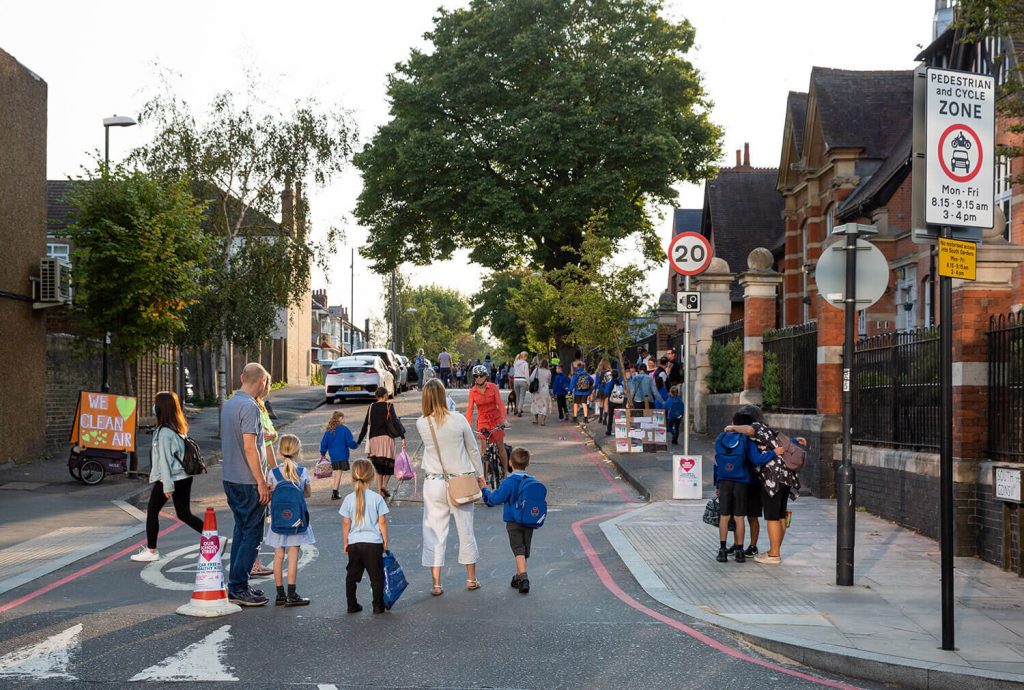
One of the most successful initiatives is the School Street program. During drop-off and pick-up times, streets near schools are closed to through traffic, creating a car-free zone for children and families. The results?
- Safer environments: Fewer cars mean fewer accidents and less pollution.
- More active kids: Children arrive at school alert and ready to learn after a short walk or ride.
- Stronger communities: Parents and kids interact more, fostering a sense of connection.
Peter notes that School Streets aren’t about banning cars—they’re about reimagining how streets can serve everyone. “It’s not closing streets to cars,” he says. “It’s opening streets to people.”
Slower Speeds, Safer Communities
Another key strategy is reducing speed limits to 30 km/h in residential areas. While some drivers resist the idea, the benefits are undeniable:
- Fewer collisions: Lower speeds drastically reduce the risk of serious injury.
- Quieter streets: Less noise pollution makes neighbourhoods more pleasant.
- More walking and cycling: When streets feel safe, people are more likely to choose active travel.
Peter points out that slower speeds don’t just protect kids—they make streets better for everyone. “A street where you can hear birds instead of engines is a street where people want to be,” he says.
Play Streets: Bringing Back Childhood Freedom
Play Streets take the concept of School Streets further by temporarily closing residential streets to traffic, allowing kids to play freely. These events, often organised by local volunteers, are a throwback to a time when streets were extensions of the home. Benefits include:
- Physical activity: Kids run, ride, and play in a safe environment.
- Social connection: Neighbours meet and build relationships.
- Community ownership: Residents take pride in shaping their local area.
For Peter, Play Streets are a powerful example of learning to walk again—not just as a mode of transport, but as a way of life.
The Role of Grassroots Advocacy in Learning to Walk Again
One of the most inspiring takeaways from Peter’s research is the power of grassroots advocacy. In the UK, many of the most successful street transformations started with local residents demanding change. Groups like Mums for Lungs, Better Streets, and Solve the School Run have pushed for safer, healthier streets by:
- Organising community events to demonstrate the benefits of car-free spaces.
- Lobbying local councils for lower speed limits and better infrastructure.
- Sharing success stories to inspire other neighbourhoods.
Peter emphasises that change often starts small. “You don’t need to be an expert,” he says. “You just need to care about your street and be willing to talk to your neighbours.”
What Can You Do? Practical Steps for Parents and Communities
If you’re inspired to bring learning to walk again to your neighbourhood, here’s where to start:
For Parents:
- Talk to your school: Advocate for a School Street program or walking school bus.
- Connect with other families: Organise a “walking wedge” where groups of kids walk together.
- Start small: Try walking or riding to school one day a week.
For Communities:
- Host a Play Street event: Work with your council to close your street for a few hours.
- Push for slower speeds: Lobby for 30 km/h limits in residential areas.
- Reclaim the kerbside: Advocate for bike parking, planters, or seating instead of car parking.
For Council Staff:
- Trial changes: Use temporary measures like planters or signs to test street designs.
- Engage the community: Ask residents what they want—then show them how it works.
- Measure success: Track changes in walking rates, safety, and community feedback.
The Bigger Picture: Why Learning to Walk Again Benefits Everyone
Learning to walk again isn’t just about kids—it’s about creating healthier, happier communities for all ages. When streets are designed for people, everyone wins:
- Healthier kids: Active travel reduces obesity and improves mental health.
- Cleaner air: Fewer cars mean less pollution.
- Stronger economies: Walkable streets support local businesses.
- More connected neighbourhoods: People who walk know their neighbours.
As Peter puts it, “Streets are the heart of our communities. When we make them safer and more inviting, we’re not just helping kids—we’re building a better future for everyone.”Conclusion: Taking the First Step
The journey of learning to walk again starts with a single step—literally and figuratively. Whether you’re a parent, a neighbour, or a council worker, you have the power to make your street safer, healthier, and more vibrant. As Peter Murray’s work shows, change is possible when communities come together to demand it.
So what’s your next step? Maybe it’s organising a Play Street, talking to your school, or simply choosing to walk instead of drive. Whatever it is, remember: every small action adds up. And when we all start learning to walk again, our streets—and our communities—will be better for it.
Links:
Reach out to Peter on LinkedIn https://www.linkedin.com/in/petemuz/
Check out Learning to Walk Again: http://learningtowalkagain.org/you can download the research report from the home page
Better Streets Australia: www.betterstreets.org.au/
Healthy Streets: www.healthystreets.com/ and to complete the survey: https://surveys.healthystreets.com/
Vic Health framing and messaging guide: www.vichealth.vic.gov.au/sites/default/files/VBM-Framing-Walking-Bike-framing—message-guide.pdf
Mums for Lungs: www.mumsforlungs.org
Solve the School Run: www.solvetheschoolrun.org
Playing Out: http://playingout.net
Active Travel to School project for the NSW Heart Foundation. This research analyses the cost-effectiveness of targeted street safety upgrades on designated active routes to school, and it was an important stepping stone for that research project into this travelling scholarship. It’s published on the Heart Foundation’s Healthy Active by Design website. Here’s the direct link to the report PDF: https://irp.cdn-website.com/541aa469/files/uploaded/Active_Travel_to_School.pdf
You can listen to Lucy Saunder’s episode here https://getaroundcaboolture.au/healthy-streets-app-lucy-saunders
And Rod King’s episode on safer street speeds here https://getaroundcaboolture.au/s1e24-pp-rod-king-20s-plenty-in-the-uk-discusses-how-to-get-safe-street-speeds-from-30mph-50kph-to-20mph-30kph/
Doctor Yes | Yari | Bensound
