
Patrick Siegman on the Cost of Unpriced Parking
The Economics and Impact of Parking Policies
In this episode of Streets and People, Patrick Siegman discusses the intricacies of parking policies and their broader economic and social impacts. Siegman explains how his interest in parking policy began as a college student and was influenced by the work of Professor Donald Shoup. He highlights how parking policies can affect housing costs, urban planning, and environmental issues. Siegman reviews successful reforms in various cities including the removal of mandatory parking space requirements and the introduction of paid parking systems that fund community services. The discussion also covers practical strategies for local councils and community members to manage parking in both urban and suburban areas.
00:00 Introduction to Streets and People
00:15 Meet Patrick Siegman
00:34 Patrick’s Journey into Parking Policy
01:26 The Economics of Parking
04:00 Parking Policy and Homelessness
04:35 Impact of Parking on Housing Costs
06:55 Unintended Consequences of Parking Regulations
09:28 Managing Street Parking
11:27 Parking Reforms in Different Cities
15:18 Challenges in Suburban Parking
16:07 Removing Minimum Parking Regulations
21:36 Community Involvement in Parking Policy
24:02 Resources for Parking Reform
31:11 Conclusion and Final Thoughts
Patrick Siegman on Parking Policy Reform
Parking policy reform is a topic that affects cities, communities, and everyday lives in ways most people rarely notice. In a recent People and Projects episode, we spoke with Patrick Siegman about how parking rules shape housing costs, equity, and urban planning. Wendy and Patrick discussed why rethinking parking isn’t just about cars—it’s about creating fairer, more liveable communities.
This conversation highlighted a subject that quietly influences economic and social outcomes, environmental sustainability, and community well-being. What follows is an exploration of how parking policies operate, why they matter, and how communities can rethink them for a better future.
How a Parking Garage Sparked Patrick’s Interest
Patrick Siegman’s journey into parking policy reform began during his university years. While he was studying, the campus built a large and costly parking garage at a time when academic programs and student services were being cut. The contrast was stark: students paid relatively small fees for parking, yet the university spent millions on construction.
This raised an important question for Patrick: Who actually bears the cost of parking?
He realised that everyone—drivers and non-drivers alike—was subsidising parking. This insight sparked a curiosity that led him to the work of Donald Shoup, the renowned economist whose research highlights the hidden costs of “free” parking. Shoup’s work, combining rigorous analysis with practical recommendations, inspired Patrick to pursue a career examining how parking policies affect cities, communities, and individual choices.
Patrick explains, “If there’s a subsidy here, maybe the university should reduce it for those of us who can afford a car instead of cutting programs essential for everyone.” That simple observation became the seed for a career focused on parking reform.
Why Parking Policy Reform Matters
Parking is more than just a convenience—it has far-reaching social, economic, and environmental impacts. Parking policy reform addresses issues that touch everyone: housing affordability, equity, traffic congestion, and urban livability.
Patrick points out a striking disparity in California, which reflects a global pattern: while housing is scarce and expensive, parking is abundant and subsidised. Developers and cities often require a minimum number of parking spaces per building, regardless of actual demand. These requirements artificially inflate costs and reduce the availability of housing.
For instance, studies show that requiring a single enclosed parking space can increase apartment rents by up to 17%. That extra cost can push already vulnerable tenants into precarious situations or eviction. By reconsidering parking minimums, communities can lower housing costs, encourage sustainable development, and create more equitable urban environments.
Hidden parking costs are often absorbed indirectly through rents and taxes. People without cars still pay for parking infrastructure, while those with cars enjoy subsidised access. Reforming these policies makes the financial burden transparent and ensures fairer allocation of resources.
Overcoming Suburban Challenges
One common question is how parking reform works in suburban areas, where car ownership is high, public transport is limited, and expectations of free, plentiful parking are entrenched. Wendy asked Patrick about strategies for these contexts.
Patrick acknowledges the challenge but emphasises that outdated regulations are often misaligned with actual needs. Many suburban homes have garages that are rarely used for parking, while driveways and streets serve real demand. Mandatory minimum parking rules result in overbuilt infrastructure and wasted space.
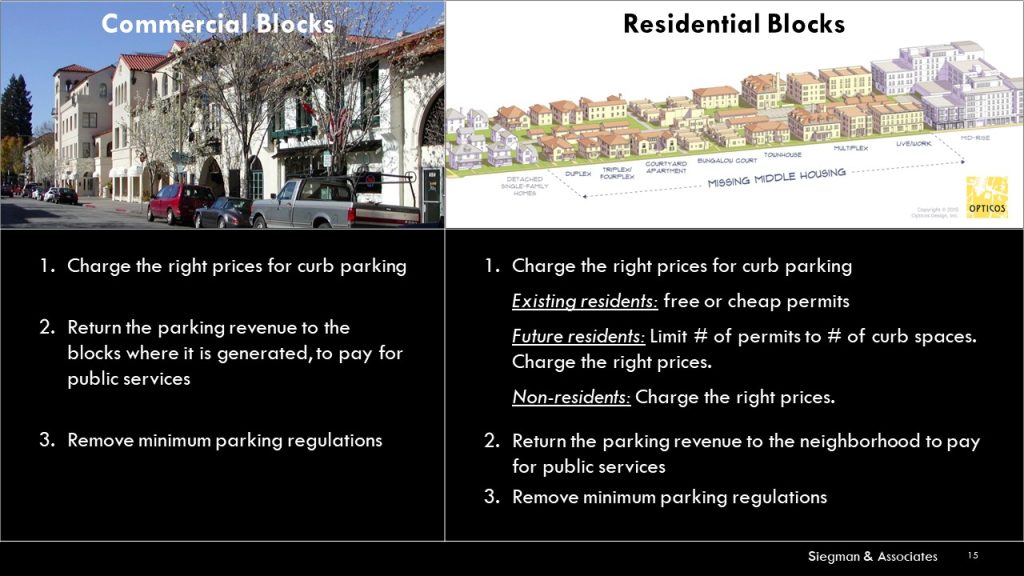
Eliminating these requirements empowers communities to make their own decisions. Residents can allocate parking based on actual use, and businesses can operate without being restricted by unnecessary rules. Patrick shares examples where managed street parking systems and flexible permit policies balance supply and demand effectively, benefiting both locals and commerce.
In essence, parking policy reform in suburbs is about giving communities control, reducing wasted resources, and fostering economic and social vitality.
Practical Steps for Community Change
Many people feel powerless when confronted with parking regulations. Patrick’s advice is to start local: identify issues that affect your neighbourhood, workplace, or local shops. Documenting problems—like unused garage spaces, crowded streets, or restrictive permit policies—creates a basis for advocacy.
Engaging with local officials, planning boards, or networks like the Parking Reform Network can amplify community voices. Educating oneself on policy, economics, and alternative solutions is a critical step. Patrick emphasises that change often begins with simple observation and clear ideas.
For urban planners early in their careers, he suggests keeping a diary of parking-related problems, tracking patterns, and proposing creative, cost-effective solutions. This approach not only builds expertise but can directly influence parking reform at a local level.
Patrick shares his own path: by identifying a budget issue at his university and proposing a practical alternative, he discovered how tangible observations and well-thought-out proposals can lead to meaningful policy change.
Global Momentum for Parking Reform
While parking policies may seem rigid, Patrick notes that reform is gaining momentum worldwide. Cities across North America, Europe, and Australia are experimenting with parking policy reform by removing minimum requirements, introducing managed pricing, and reclaiming public space.
Success often comes gradually. Policies that remove excessive parking mandates do not force people to abandon cars; they simply allow communities to make choices that better reflect actual needs. When residents see that reform reduces congestion, improves access, and even generates revenue for local improvements, resistance tends to fade.
Patrick emphasises that these successes demonstrate the power of thoughtful policy: small changes to parking rules can ripple outward, improving housing affordability, environmental sustainability, and quality of life.
Parking as a Lens for Better Cities
Ultimately, parking policy reform serves as a lens for larger urban challenges. It forces us to ask:
- Who pays for infrastructure?
- Who benefits and who bears the cost?
- How do rules shape behaviour, opportunity, and equity?
By questioning parking norms, communities can rethink urban planning more broadly. This includes land use, transportation choices, housing, and public space. Patrick stresses that reform is not about eliminating cars but about preventing outdated policies from quietly dictating outcomes that no longer serve society.
As he puts it, “We’re seeing tremendous success in parking reform all around the world. There’s a tremendous opportunity to change things for the better.”
For cities, suburbs, and neighbourhoods, the conversation about parking is really a conversation about values: fairness, efficiency, and liveability. By tackling hidden parking costs, rethinking minimums, and empowering communities, reform can unlock opportunities for more equitable, sustainable, and vibrant urban life.
Summary
Parking may seem mundane, but it shapes our streets, our housing, and our communities in profound ways. Patrick Siegman’s insights remind us that parking policy reform is not a niche topic—it is a lever for economic fairness, environmental stewardship, and social equity.
Whether through eliminating excessive parking minimums, introducing smarter pricing, or advocating for community-driven policies, there is a path toward better urban living. As Patrick underscores, even small local changes can ripple outward, transforming neighbourhoods and cities alike.
In the end, changing how we think about parking is about more than cars: it is about designing cities and suburbs that work for people, not just vehicles. By rethinking parking, we open the door to more liveable, just, and sustainable communities.
Check out our chat with Tony Jordan from PRN: https://getaroundcaboolture.au/tony-jordan-parking-reform-journey/
Find Patrick on LinkedIn: https://www.linkedin.com/in/patrick-siegman-412b33209/
Patrick’s website: www.siegman.biz
PRN’s website: www.parkingreform.org
A good article: https://www.lincolninst.edu/publications/articles/2022-10-shifting-gears-eliminating-off-street-parking-requirements/
Podcast theme music: Doctor Yes | Yari | Bensound
GetAroundCaboolture.au
